Introduction
Preparing a poultry house before bringing day-old chicks is one of the most important steps in poultry farming. Many chick losses in Kenya happen because farmers bring chicks into houses that are dirty, cold, or poorly prepared.
This guide explains how to prepare a poultry house properly so that day-old chicks settle well, grow healthy, and experience minimal stress during their first weeks.
Why proper poultry house preparation is important
Day-old chicks are very delicate. They cannot regulate their body temperature and are highly vulnerable to disease.
A well-prepared poultry house helps maintain warmth, reduces exposure to germs, and allows chicks to feed and drink easily. Proper preparation directly reduces chick mortality and improves growth.
Choosing the right location for the poultry house
The poultry house should be built or set up in a dry area that does not flood during rains. Waterlogged areas increase dampness and disease risk.
Choose a location with good air circulation but protected from strong winds. The house should also be away from other livestock to reduce disease transmission.
Cleaning the poultry house thoroughly
Before chicks arrive, remove all old litter, feathers, and waste from the house.
Sweep the floor, walls, and corners to remove dust and dirt. Pay special attention to cracks and hidden areas where germs and parasites may hide.
Cleaning removes organic matter that can carry disease.
Disinfecting the poultry house
After cleaning, disinfect the entire house.
Use an approved poultry disinfectant to spray floors, walls, doors, and equipment. Disinfection kills bacteria, viruses, and parasites that cleaning alone cannot remove.
Allow the house to dry completely before adding new litter.
Repairing and securing the poultry house
Check the poultry house for holes, gaps, or broken wire mesh.
Repair any openings that can allow rats, snakes, or other predators to enter. Ensure doors close properly and windows are well secured.
Predator control protects chicks from injury and stress.
Preparing the floor and litter
Spread clean, dry litter on the floor. Wood shavings are commonly used in Kenya because they absorb moisture well.
The litter should be thick enough to provide insulation but not too deep to restrict movement. Wet or dusty litter should never be used.
Good litter management keeps chicks warm and reduces disease.
Setting up feeders and drinkers
Place feeders and drinkers before chicks arrive.
Ensure they are clean and positioned at chick level so chicks can reach feed and water easily. Avoid overcrowding feeders and drinkers, as this causes competition and stress.
Using proper chicken feeders and drinkers reduces feed wastage and keeps water clean.
Setting up the brooding area
Create a brooding area inside the poultry house using cardboard or wire to limit chick movement during the first days.
Install a reliable heat source in the brooding area. Bulbs, charcoal brooders, or gas brooders can be used.
Gas brooders provide consistent heat and are effective for maintaining the correct brooding temperature.
Pre-heating the poultry house
Pre-heat the poultry house at least 12 hours before chicks arrive.
This helps stabilize temperature and allows you to check whether the heat source is working properly. A warm house helps chicks settle quickly and start feeding immediately.
Never bring chicks into a cold house.
Checking ventilation and airflow
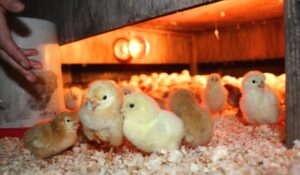
Proper ventilation is important, even during brooding.
Ensure fresh air enters the house without creating strong drafts. Poor ventilation leads to ammonia buildup, which affects chick health.
Good airflow supports healthy growth.
Setting up biosecurity measures
Limit access to the poultry house.
Footbaths should be placed at the entrance, and visitors should not enter unnecessarily. Equipment should not be shared between different poultry houses without cleaning.
Biosecurity prevents disease introduction.
Final checks before chick arrival
Before bringing day-old chicks, confirm that the house is clean, dry, warm, and secure.
Check that feeders and drinkers are filled, the heat source is functioning, and the litter is dry. Doing a final inspection helps avoid last-minute mistakes.
Common mistakes farmers should avoid
Many farmers rush preparation and skip cleaning or disinfection.
Others overcrowd the brooding area or use poor-quality equipment. These mistakes increase chick stress and mortality.
Proper preparation saves money and prevents losses.
Conclusion
Preparing a poultry house before bringing day-old chicks is a critical step in successful poultry farming.
Cleanliness, warmth, proper equipment, and good planning create a safe environment for chicks. When preparation is done correctly, chicks grow healthier and losses are minimized.
Investing time in proper house preparation and using reliable feeders, drinkers, brooders, and egg trays sets your poultry farm up for success from day one.